

Electrical distribution systems are the backbone of modern facilities. From data centers and industrial plants to hospitals and large commercial buildings, these systems are responsible for safely delivering power where it is needed, when it is needed. Two of the most common components within these systems such as switchgear and switchboards are often mentioned together and sometimes used interchangeably. However, they serve different purposes and are designed for very different operating conditions.
Understanding the differences between switchgear and switchboards is essential for engineers, facility managers, and project teams making decisions that affect safety, reliability, and long-term performance. This article explores how each functions, where each is best applied, and why UL 891 certified switchgear plays a critical role in high-demand environments.
Understanding the Role of Electrical Distribution Equipment
Switchgear is a protective assembly of electrical devices designed to control, isolate, and protect power systems. IAt a high level, both switchgear and switchboards distribute electrical power from upstream sources such as utilities, generators, or transformers to downstream loads. Where they differ is in how they manage fault protection, maintenance access, safety, and system reliability.
The choice between switchgear and switchboards is not just a matter of terminology or preference. It is a design decision that directly affects uptime, operational flexibility, and risk exposure over the life of a facility.
What is a Switchgear?
Switchgear is a protective assembly of electrical devices designed to control, isolate, and protect power systems. It is engineered for environments with high electrical loads, higher available fault currents, and strict requirements for uptime and safety.
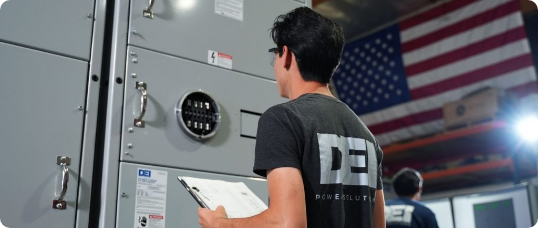
In the United States, most low-voltage switchgear is built to UL 891 standards, which define construction, testing, and performance requirements for dead-front switchgear assemblies. UL 891 switchgear is tested for short-circuit withstand, temperature rise, mechanical integrity, and safe operation under both normal and fault conditions.
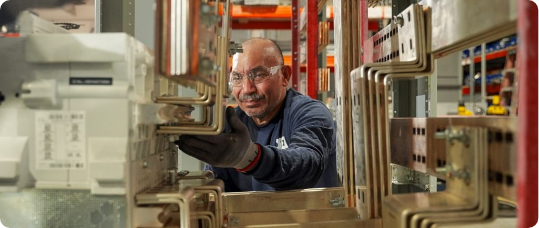
A defining characteristic of switchgear is its compartmentalized construction. Breakers, bus, control wiring, and cable terminations are enclosed in separate metal sections. This design limits fault propagation, reduces arc-flash exposure, and allows work to be performed on one section while others remain energized.
Switchgear commonly incorporates draw-out circuit breakers, which can be racked out for inspection or maintenance without shutting down the entire lineup. This capability is especially important in facilities where continuous operation is critical.
Modern switchgear systems also integrate advanced protection and monitoring technologies. Microprocessor-based relays provide real-time system data, remote monitoring reduces the need for onsite troubleshooting, and arc-flash mitigation strategies help protect both personnel and equipment during abnormal events.
Because of these capabilities, switchgear is widely used in data centers, industrial facilities, healthcare environments, utilities, and other mission-critical applications where reliability is non-negotiable.
What is a Switchboard?
At DEI Power Solutions, we specialize in UL 891 switchgear manufacturing, delivering engineered solutions for A switchboard is an electrical distribution assembly primarily designed to route power to branch circuits. Switchboards are commonly found in commercial buildings, retail facilities, schools, and smaller industrial environments where electrical loads are more predictable and fault levels are lower.
Switchboards typically use fixed-mounted breakers, meaning the breakers are bolted in place and cannot be removed while energized. Maintenance or replacement often requires powering down part or all of the board. Their internal construction is simpler and less compartmentalized than switchgear, which makes them more cost-effective but also limits their performance in high-demand conditions.
While switchboards may also comply with UL standards, they are generally intended for applications where advanced protection, selective coordination, and continuous uptime are not critical requirements.
Key Differences Between Switchgear and Switchboards
The differences between switchgear and switchboards become clear when viewed through the lens of safety, performance, and lifecycle impact.
Safety and Construction
Switchgear offers superior isolation through compartmentalized, metal-enclosed construction. This reduces arc-flash risk and limits the spread of faults. Switchboards, by contrast, use shared enclosures that provide basic protection but less fault containment.
Maintenance and Uptime
Switchgear’s draw-out breakers allow maintenance without taking the entire system offline, which is essential in mission-critical facilities. Switchboards typically require shutdowns for servicing, making them better suited for non-critical environments.
Short-Circuit and Interrupt Ratings
Switchgear is designed to handle higher available fault currents and interrupt them safely. Switchboards have lower interrupt ratings and are intended for systems with moderate electrical demand.
Cost and Complexity
Switchgear is more sophisticated and therefore more expensive upfront, but it provides greater reliability and operational flexibility. Switchboards offer a more economical solution when advanced protection is not required.
Why UL 891 Certified Switchgear Matters in High-Demand Facilities
As facilities become more power-intensive, the importance of equipment standards increases. UL 891 certified switchgear provides a consistent, tested framework for performance in demanding environments.
One of the most important benefits of UL 891 certified switchgear is its ability to safely manage higher fault energy, which is increasingly common as systems grow and become more interconnected. UL 891 testing verifies that the equipment can withstand these stresses without creating unsafe conditions or widespread damage.
UL 891 also emphasizes dead-front construction, reducing the risk of accidental contact with energized components during normal operation. This improves safety in electrical rooms where routine inspection and maintenance are required.
The Impact of Manufacturing Quality
While UL 891 defines minimum testing and safety requirements, real-world reliability depends heavily on how switchgear is manufactured. Precision bus work, proper torquing, consistent assembly practices, and thorough factory testing all influence long-term performance.
Experienced switchgear manufacturing ensures that UL 891 certified equipment not only meets compliance requirements but also performs consistently once installed. Quality manufacturing reduces the likelihood of loose connections, uneven temperature rise, or commissioning challenges that can compromise reliability.
In practice, the standard sets the bar but manufacturing quality determines how well the equipment clears it.
Choosing the Right Solution
In many large facilities, both switchgear and switchboards play important roles within the same electrical system. Switchgear is typically used at main distribution points where protection and uptime are critical, while switchboards serve downstream distribution needs where loads are less demanding.
Understanding the difference allows engineers and facility owners to place each component where it performs best, creating a system that balances cost, safety, and reliability.
Learn More About UL 891 Certified Switchgear Solutions
Switchgear and switchboards may appear similar at first glance, but their differences have significant implications for safety, performance, and long-term operation. In modern facilities with high electrical demand, UL 891 certified switchgear continues to play a central role in supporting reliable, resilient power distribution.
To learn more about UL 891 certified switchgear, custom switchgear manufacturing, and engineered electrical solutions, visit our website at https://deipowersolutions.com/ or give us a call at 866-773-8050.