

Industrial facilities place unique and demanding requirements on electrical systems. Manufacturing plants, processing facilities, warehouses, and infrastructure sites rely on continuous power to keep operations running safely and efficiently. Unlike commercial buildings, where loads are often predictable, industrial environments introduce fluctuating demand, harsh conditions, and critical equipment that cannot tolerate unexpected outages.
At the center of this electrical ecosystem are panelboards. Panelboards are the assemblies responsible for distributing power to branch circuits, equipment, and control systems. While standard panelboards may work for simple applications, custom panelboards play a critical role in improving reliability where conditions are complex and downtime is costly.
Understanding why customization matters helps engineers, facility managers, and operators design electrical systems that perform consistently over the long term.
What Panelboards Do in Industrial Facilities
Panelboards serve as distribution hubs that route electrical power from upstream sources to individual circuits and loads. In industrial settings, these loads can include motors, conveyors, control panels, pumps, compressors, and automation systems often operating simultaneously and under varying conditions.
Because panelboards sit downstream of switchgear and upstream of equipment, their performance directly affects system stability. Poorly matched panelboards can become bottlenecks, experience overheating, or complicate maintenance, all of which increase the risk of outages.
Custom panelboards are designed specifically around the electrical and operational realities of the facility, rather than forcing the facility to adapt to a generic product.
Why Reliability Is a Bigger Challenge in Industrial Applications
Reliability in industrial environments is challenged by several factors that are less common in commercial settings. Load profiles are often dynamic, with large motors starting and stopping throughout the day. Fault currents can be high, especially in facilities with substantial utility feeds or on-site generation. Environmental conditions such as dust, vibration, moisture, or temperature extremes can add additional stress.
In these conditions, electrical distribution equipment must do more than simply carry current. It must remain stable under electrical and mechanical stress, protect sensitive equipment, and allow maintenance to occur without disrupting production.
Custom panelboards help address these challenges by aligning design choices with real-world operating conditions rather than theoretical averages.
Matching Panelboard Design to Actual Load Profiles
One of the biggest reliability advantages of custom panelboards is accurate load matching. Standard panelboards are often designed with generic assumptions about circuit usage and diversity. In industrial facilities that require high power loads, those assumptions may not hold.
Custom designs allow engineers to size bus, breakers, and feeder arrangements based on actual load data, duty cycles, and growth expectations. This reduces the risk of overheating, nuisance tripping, and uneven loading across phases. It also supports better coordination with upstream protective devices, which improves fault isolation and system stability.
In practical terms, a panelboard that is sized and laid out for the way a facility actually operates is far less likely to become a weak point in the system.
Improving Maintainability without Sacrificing Uptime
Maintenance access is a major factor in long-term reliability. Industrial facilities often need to perform electrical work while minimizing downtime, especially in continuous or multi-shift operations.
Custom panelboards can be designed with maintenance in mind. This includes thoughtful circuit grouping, logical labeling, spare capacity for future additions, and layouts that allow technicians to isolate sections without affecting unrelated loads. Clear organization reduces the chance of human error during troubleshooting or upgrades.
When maintenance is easier and safer to perform, it tends to happen more consistently which directly supports reliability over time.
Supporting Harsh and Demanding Environments
Industrial environments can be tough on electrical equipment. Dust, vibration, corrosive atmospheres, and temperature swings all shorten equipment life if not properly accounted for during design.
Custom panelboards allow enclosure types, finishes, and internal components to be selected based on environmental exposure. Whether the application requires added sealing, reinforced mounting, or specific material choices, customization ensures the panelboard is suited to its surroundings.
This attention to environmental compatibility helps prevent degradation that can lead to faults, intermittent issues, or premature replacement.
Coordination With Switchgear and Upstream Protection
Reliability is not achieved by individual components acting alone. It depends on how well the entire electrical distribution system works together. Custom panelboards play an important role in ensuring proper coordination with upstream switchgear, transformers, and protective devices.
When panelboards are engineered as part of the overall system, breaker settings, fault ratings, and circuit layouts can be aligned with upstream protection strategies. This improves selective coordination (e.g. a fault in one area is isolated locally instead of triggering a wider outage).
For industrial facilities, this level of coordination is critical. It limits the impact of electrical faults and keeps unaffected processes running.
Flexibility for Expansion and Process Changes
Industrial operations evolve, production lines change, equipment is upgraded, and processes are optimized over time. Electrical systems that lack flexibility often become obstacles to these improvements.
Custom panelboards can be designed with future expansion in mind. Spare breaker spaces, scalable bus capacity, and modular layouts allow new circuits to be added without major rework. This reduces the likelihood that temporary solutions will be introduced later whereas solutions that often compromise reliability. By planning for change, custom panelboards support both current operations and future needs.
Manufacturing Quality and Consistency Matter
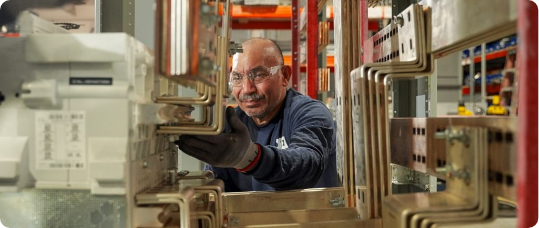
Even the best design will fall short if execution is poor. Reliability depends heavily on how panelboards are built. Precision assembly, consistent torquing, proper conductor routing, and thorough factory testing all influence long-term performance.
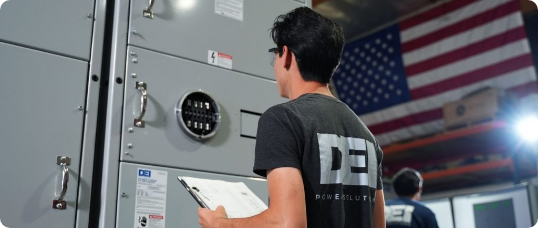
Experienced panelboard manufacturing ensures that custom designs are executed accurately and repeatably. Factory testing helps identify issues before installation, reducing the risk of problems emerging once the panelboard is energized in the field. In industrial settings, where access may be limited and downtime expensive, getting it right the first time matters.
When Custom Panelboards Make the Most Sense
Custom panelboards are particularly valuable in industrial applications where reliability is critical and conditions are complex. Facilities with large motor loads, continuous operations, challenging environments, or frequent process changes benefit most from tailored electrical distribution.
Rather than treating panelboards as interchangeable components, these facilities recognize them as integral parts of a reliability-focused system.
Learn More About Custom Panelboard Solutions
Custom panelboards improve reliability by aligning electrical distribution with real operating conditions, supporting safe maintenance, and allowing systems to adapt as facilities evolve. In industrial environments, where the cost of downtime is high, alignment of custom panelboards is essential.
At DEI Power Solutions, we focus on precise engineering, quality manufacturing, and dependable lead times—helping industrial facilities build electrical systems that support long-term reliability.
To learn more about custom panelboards, industrial electrical distribution, and U.S.-manufactured power solutions, visit DEI Power Solutions at https://deipowersolutions.com/ or give us a call at 866-773-8050.