

Modern facilities depend on electrical systems that are more complex, more powerful, and more critical than ever before. Data centers support digital infrastructure around the clock, industrial plants rely on continuous power to maintain production, and commercial buildings are increasingly automated and electrified. As these demands grow, the equipment responsible for distributing and protecting electrical power becomes a foundational element of facility design.
One of the most widely used standards for low-voltage switchgear in the United States is UL 891. While it may appear to be just another compliance requirement on a specification sheet, UL 891 plays a much larger role in how electrical systems perform, how safely they operate, and how reliable they are to support modern facilities over time.
Understanding What UL 891 Switchgear Is
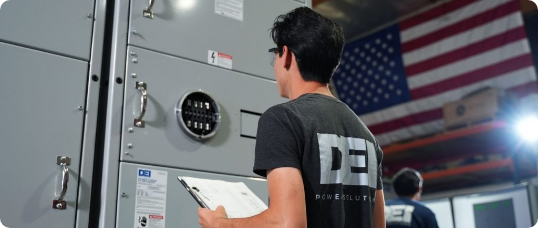
UL 891 is a safety standard developed by Underwriters Laboratories (UL) that applies to dead-front, low-voltage switchgear assemblies. These assemblies are designed to distribute electrical power, isolate faults, and protect downstream equipment and personnel. Equipment built to UL 891 is evaluated through testing that verifies mechanical integrity, short-circuit performance, temperature rise, and safe operation under both normal and abnormal conditions.
From a practical standpoint, UL 891 certified switchgear serves as the main distribution point between incoming power sources such as utility feeds, generators, transformers, and the electrical loads within a facility. Because of its central role, any weakness in this equipment can affect large portions of a building or campus. UL 891 exists to reduce that risk by establishing a consistent baseline for performance and safety.
Why Standards Matter More in Today’s Electrical Systems
Electrical systems today operate under much tighter margins than in the past. Higher load density, increased fault currents, and the growing interconnection of equipment all increase the consequences of failure. In many facilities, power disruptions can result in data loss, safety risks, or significant financial impact.
UL 891 certified switchgear is designed with these realities in mind. One of its key strengths is the ability to handle higher available fault currents safely. As facilities expand or connect additional power sources, fault energy increases. Switchgear must be capable of withstanding and interrupting these events without creating secondary damage or unsafe conditions. UL 891 testing confirms that the equipment can perform reliably under these stresses.
Beyond electrical performance, UL 891 also emphasizes dead-front construction, which limits exposure to energized components during normal operation. This design approach reduces the risk of accidental contact and supports safer working conditions in electrical rooms, especially in facilities where maintenance and inspection occur regularly.
Supporting Reliability and Uptime in Critical Facilities
In modern facilities, uptime is often non-negotiable. Data centers operate 24/7, healthcare environments rely on continuous power for life-safety systems, and industrial processes depend on stable electrical supply to avoid costly interruptions. Switchgear plays a direct role in maintaining that reliability.
UL 891 certified switchgear supports reliable operation through robust construction and compatibility with advanced protective devices. When paired with modern relays and monitoring systems, it enables early detection of abnormal conditions such as overloads, voltage fluctuations, or developing faults. This allows operators to address issues proactively instead of reacting to unexpected failures.
The result is a power distribution system that behaves predictably under both normal and fault conditions which is an essential characteristic in facilities where downtime has outsized consequences.
Flexibility for Modern Facility Design and Expansion
Another reason UL 891certified switchgear remains so important is its flexibility. Modern facilities are rarely static. Data centers scale in phases, manufacturing plants add new production lines, and commercial buildings adapt to changing tenant needs. Electrical distribution equipment must accommodate these changes without requiring complete system replacement.
UL 891 certified switchgear supports custom and scalable configurations that allow engineers to design systems around specific load profiles, space constraints, and future expansion plans. Sections can be arranged to support multiple feeders, tie breakers, generators, or uninterruptible power supply (UPS) systems, and layouts can be adapted to fit the physical realities of electrical rooms.
This adaptability makes UL 891 certified switchgear particularly well suited for facilities that expect growth or evolving power requirements over time.
The Role of UL 891 in Data Centers and High-Density Environments
High-density facilities such as data centers place unique demands on electrical infrastructure. Increased rack power density, tighter thermal margins, and higher short-circuit levels all raise the bar for distribution equipment. In these environments, low-voltage switchgear must deliver high capacity while maintaining safety and reliability.
UL 891 certified switchgear provides a strong foundation for these systems by supporting dependable low-voltage distribution in compact, engineered lineups. UL 891s’ tested performance under fault conditions and compatibility with modern protection schemes make it a practical choice for facilities that operate at the edge of traditional design limits.
As power density continues to rise, equipment built to proven standards becomes increasingly important.
Manufacturing Quality Matters as Much as the Standard
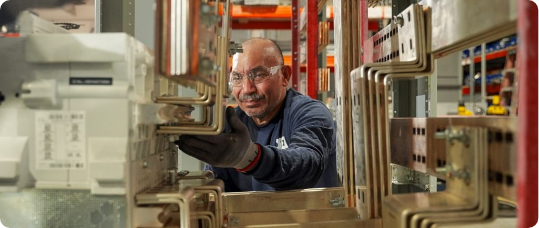
While UL 891 defines testing and safety requirements, the real-world performance of switchgear depends heavily on how it is manufactured. Precision bus work, proper torqueing, consistent assembly practices, and thorough factory testing all influence how equipment performs once installed.
Experienced switchgear manufacturing helps ensure that UL 891 certified equipment meets not only minimum compliance requirements but also long-term reliability expectations. Quality manufacturing reduces the likelihood of issues such as loose connections, uneven temperature rise, or installation challenges, all of which can undermine system performance over time.
In all, the UL 891 standard sets the bar but ultimately the manufacturing quality determines how well the equipment clears it.
What to Consider When Specifying UL 891 Switchgear
When specifying UL 891 certified switchgear for a project, it’s important to look beyond the label. Engineers and facility owners should consider available fault current, anticipated load growth, maintenance access, and coordination with upstream and downstream equipment. These factors influence not only safety and performance but also how easily the system can be operated and expanded in the future.
Taking a thoughtful, forward-looking approach during design helps ensure that the switchgear supports the facility’s needs over its entire lifecycle.
Learn More About UL 891 Switchgear Solutions
UL 891 certified switchgear remains a cornerstone of modern electrical distribution because it balances safety, reliability, and flexibility. As facilities become more power-intensive and operational expectations rise, choosing equipment built to proven standards is a practical way to reduce risk and support long-term performance.
At DEI Power Solutions, we focus on precise engineering, quality manufacturing, and efficient lead times—supporting modern facilities with electrical equipment built to meet today’s demands without unnecessary complexity.
To learn more about our UL 891 switchgear, custom switchgear solutions, and U.S.-manufactured electrical distribution equipment, visit DEI Power Solutions athttps://deipowersolutions.com/ or give us a call at 866-773-8050.