
Switchgear is one of the most critical components in any electrical distribution system. It protects equipment, isolates faults, and enables safe operation across industrial, commercial, and mission-critical facilities. As facilities age, expand, or change operational requirements, many owners and engineers face the same question: should existing switchgear be retrofitted, or is full replacement the better long-term solution?
The answer is rarely straightforward. Retrofitting and replacing switchgear each offer advantages and limitations depending on system condition, operational risk, budget constraints, and long-term facility goals. Understanding how these options differ and is the best path forward can help engineers, contractors, procurement teams, and facility owners make informed decisions that balance reliability, safety, cost, and downtime.
The Role of Switchgear in Facility Operations
Switchgear serves as the central control point for electrical power distribution. It manages incoming utility or generation sources, protects downstream equipment, and provides operators with the ability to safely isolate sections of the system. Because of its position in the electrical hierarchy, switchgear failures can affect large portions of a facility and, in some cases, bring operations to a halt.
Many facilities continue operating switchgear that was installed decades ago. While this equipment may still function, evolving load profiles, higher available fault currents, updated codes, and modern safety expectations can push older systems beyond their original design intent. When that happens, facilities must evaluate whether upgrading components through retrofit is sufficient or whether full replacement is required to maintain safe and reliable operation.
What Retrofitting Switchgear Involves
Retrofitting switchgear typically involves upgrading specific components within an existing lineup while keeping the original enclosure and bus structure intact. Common retrofit efforts include replacing circuit breakers, upgrading protective relays, improving control wiring, or adding digital monitoring and metering capabilities.
From a practical standpoint, retrofitting is often considered when the physical structure of the switchgear is still in good condition but certain components are obsolete, unreliable, or no longer supported by manufacturers. A well-executed retrofit can extend the service life of existing equipment while improving system visibility and maintainability.
One of the primary advantages of retrofitting is reduced disruption. In many facilities, retrofit work can be phased or scheduled during planned outages, helping minimize downtime. Retrofitting may also involve lower upfront costs compared to full replacement, which can be appealing when capital budgets are constrained.
However, retrofitting does not fundamentally change the original design of the switchgear. Bus ratings, enclosure layout, and clearances remain fixed, which can limit future expansion or restrict the ability to meet newer safety expectations.
When Retrofitting Is the Right Choice
Retrofitting often makes sense when existing switchgear has sufficient short-circuit ratings and is structurally sound. If the primary concerns are aging breakers, outdated protection schemes, or lack of monitoring, a targeted retrofit can significantly improve reliability without the complexity of a full replacement project.
Facilities with limited shutdown windows also tend to favor retrofit solutions. When downtime must be tightly controlled, retrofits can offer a practical path forward, provided the system has been thoroughly evaluated and risks are well understood.
That evaluation is critical. Engineers must assess insulation condition, bus integrity, mechanical wear, and available fault current to ensure the existing equipment can safely support new components. Retrofitting without this due diligence can introduce unintended risks.
What Replacing Switchgear Involves
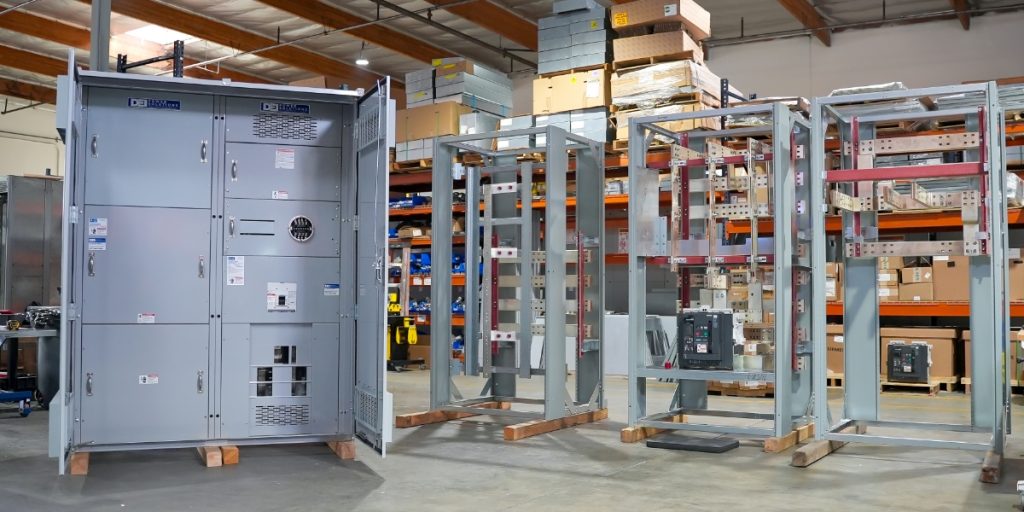
Replacing switchgear means removing existing equipment and installing a completely new lineup designed to meet current codes, standards, and operational requirements. Replacement projects typically include updated short-circuit ratings, modern protective relays, improved compartmentalization, and enhanced safety features such as arc-flash mitigation options.
New switchgear also provides an opportunity to rethink the overall electrical distribution strategy. Facilities can redesign layouts, improve redundancy, accommodate future load growth, and align systems with long-term operational goals rather than working around legacy constraints.
While replacement usually requires more upfront investment and coordination, it often delivers greater flexibility, improved safety, and stronger long-term reliability.
Key Factors in the Retrofit vs. Replacement Decision
One of the most important considerations is the condition of the existing system. Equipment showing signs of insulation degradation, corrosion, mechanical wear, or past fault damage may not be good candidates for retrofit.
Available fault current is another critical factor. As facilities expand or add generators and utility upgrades, fault levels often increase. If existing switchgear cannot safely withstand those levels, replacement becomes necessary to maintain compliance and safety.
Operational risk and downtime tolerance must also be considered. While retrofits can reduce disruption, aging systems may still carry reliability risks after upgrades. Replacement projects require more planning but can result in cleaner, more predictable system performance.
Finally, teams should evaluate long-term facility plans. If future expansion, redundancy improvements, or code-driven upgrades are anticipated, replacing switchgear may offer better lifecycle value than incremental retrofits.
Safety, Compliance, and Modern Standards
Modern switchgear is designed with safety as a core consideration. Improved compartmentalization, better fault containment, and compatibility with arc-flash reduction strategies all contribute to safer electrical environments.
While retrofits can enhance protection, they may not fully achieve the inherent safety levels of new equipment designed to current standards. Compliance with applicable UL standards, including UL 891 for low-voltage switchgear, should be part of any evaluation. Replacement projects typically make alignment with current standards more straightforward, while retrofit solutions may require careful documentation to demonstrate compliance.
The Importance of Engineering and Early Planning
Whether retrofitting or replacing switchgear, early engineering involvement is essential. System studies such as short-circuit analysis, protective device coordination, and load evaluations provide the technical foundation for informed decision-making.
Early planning also helps procurement teams understand lead times and allows construction teams to sequence work efficiently. This proactive approach reduces surprises, supports safer execution, and helps projects stay on schedule regardless of the chosen path.
Choosing the Right Path Forward
There is no universal answer to whether retrofitting or replacing switchgear is the better option. The right decision depends on technical conditions, operational priorities, safety expectations, and long-term facility goals.
Facilities that approach this decision thoughtfully—by evaluating system conditions, engaging experienced engineering and manufacturing partners, and planning early—are better positioned to manage risk, control costs, and avoid unplanned outages.
Learn More About Switchgear Solutions
Deciding whether to retrofit or replace switchgear is a significant decision with long-term implications. Understanding the trade-offs helps project teams select solutions that align with both immediate needs and future plans.
To learn more about switchgear, UL 891 switchgear, and custom-engineered electrical distribution solutions, visit our DEI Power Solutions website at: https://deipowersolutions.com/.
You can also reach our team directly at 866-773-8050 to discuss system evaluations and planning considerations for your facility.