
Electrical distribution equipment plays a critical role in how power is delivered, controlled, and protected within modern facilities. From data centers and industrial plants to commercial buildings and public infrastructure, this equipment is essential to operating safely and reliably under a wide range of conditions.
While engineers, contractors, and procurement teams often focus on UL certifications during specification and purchasing, the value ultimately extends to facility owners, operators, and occupants. UL certifications help ensure electrical systems behave predictably under both normal operation and fault conditions, which supports safer buildings and more reliable power over time. For consumers, this translates into fewer unexpected disruptions, reduced long-term risk, and greater confidence that the systems behind the walls are designed to protect people, property, and operations.
For end consumers, UL certifications serve as an important safeguard, providing assurance that the electrical equipment powering their facility has been independently evaluated against established safety and performance standards. Rather than relying solely on manufacturer claims, consumers benefit from knowing that UL-certified equipment has been tested to reduce the risk of electrical failures that can lead to downtime, safety incidents, or costly repairs.
In many cases, UL-certified equipment also simplifies insurance approvals, inspections, and compliance with local electrical codes. That added layer of third-party verification helps reduce liability exposure and provides peace of mind—not just at installation, but throughout the lifecycle of the facility.
What UL Is and Why it Matters
Underwriters Laboratories (“UL”) is an independent organization that develops safety standards and evaluates products to verify compliance with those standards. UL certifications provide third-party confirmation that equipment meets established requirements for safety, performance, and reliability.
When electrical distribution equipment carries a UL mark, it means the product has been tested under defined conditions and evaluated for risks such as overheating, short circuits, and mechanical failure. This independent verification reduces uncertainty and helps align expectations across designers, installers, inspectors, and end users. In most U.S. states and municipalities, UL-listed electrical equipment is required to meet electrical codes, pass inspections, and satisfy insurance or regulatory requirements.
The Difference Between UL Certifications and UL Listings
The terms “UL certified” and “UL listed” are often used interchangeably, but they can refer to slightly different meanings depending on the product and context. In electrical distribution, a UL Listing typically indicates that a complete assembly has been tested and approved for a specific application under a defined UL standard. UL Certification may also apply to components or subsystems that meet established criteria.
What matters most for equipment buyers and specifiers is that the UL mark signifies verified compliance with a recognized safety standard. It is not a manufacturer’s internal claim, but an independent assessment tied to documented testing and ongoing compliance requirements.
Why UL Certifications Are Critical in Electrical Distribution
Electrical distribution equipment operates at the intersection of high energy, complex systems, and human interaction. Failures can result in equipment damage, extended downtime, or serious safety hazards. UL certifications exist to reduce these risks by defining how equipment must be designed, constructed, and tested before it reaches the field.
In modern facilities, UL-certified electrical distribution equipment supports safer operation under normal conditions and during fault events. It helps ensure predictable performance across a range of loads and simplifies inspections and approvals. As electrical systems grow more interconnected and power levels increase, the role of UL certifications becomes even more important.
Common UL Standards Used in Electrical Distribution Equipment
Different types of electrical distribution equipment are governed by different UL standards, each developed around specific performance and safety requirements. Understanding these standards helps clarify where different pieces of equipment fit within an electrical system.
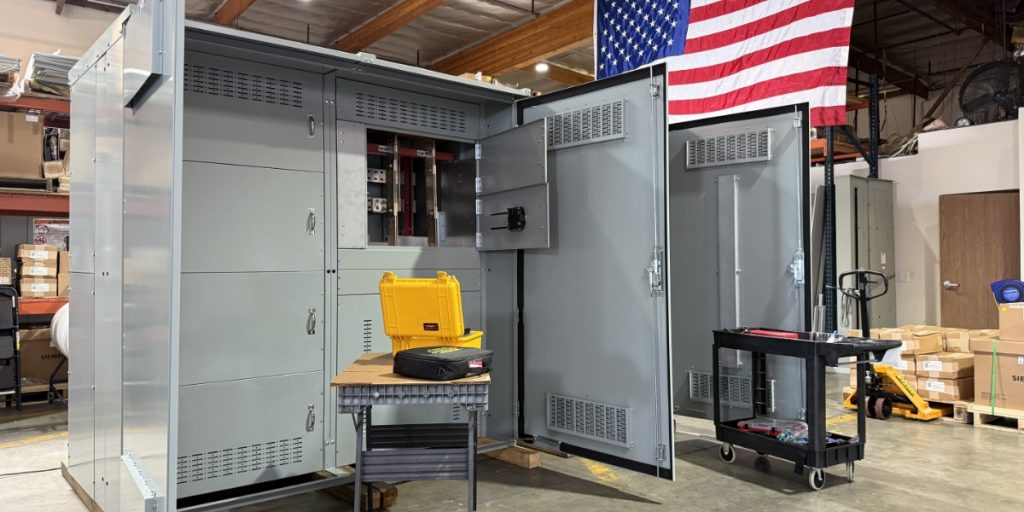
UL 891 applies to dead-front, low-voltage switchgear assemblies and is one of the most widely used standards in the U.S. Equipment built to UL 891 is tested for short-circuit withstand capability, temperature rise, mechanical integrity, and safe operation during abnormal conditions. Because of this, UL 891 switchgear is commonly used in data centers, industrial facilities, healthcare environments, and other applications where reliability and uptime are critical.
UL 67 governs panelboards that distribute power to branch circuits. These panelboards are typically used downstream of switchgear and are designed for predictable, lower fault-level environments while still meeting defined safety requirements.
UL 1558 applies to metal-enclosed, low-voltage power circuit breaker switchgear. While it shares some similarities with UL 891, it addresses different construction and application scenarios, often in specialized or utility-focused installations.
Each of these standards plays a specific role in ensuring that electrical distribution equipment performs safely and consistently within its intended application.
How UL Certifications Support Safety in Real-World Conditions
One of the most important aspects of UL certification is how it addresses equipment behavior during fault conditions. Electrical distribution systems must handle abnormal events such as short circuits, overloads, or component failures without creating unsafe situations for people or facilities.
UL testing evaluates whether equipment can contain fault energy, maintain structural integrity, and limit exposure to energized components. This testing helps ensure that equipment behaves in a predictable manner when stressed, which is essential in electrical rooms where personnel may need to perform inspections or maintenance.
From a practical perspective, UL-certified equipment reduces the likelihood that a single failure will escalate into a broader safety incident.
UL Certifications and Long-Term Reliability
Safety and reliability are closely connected. Equipment that is designed and tested to handle worst-case scenarios is more likely to perform consistently over time. In facilities where downtime is costly, UL-certified electrical distribution equipment provides a reliable foundation for system design.
UL standards establish minimum performance requirements, but they also create consistency across manufacturers and projects. This consistency helps engineers coordinate protection devices, contractors install equipment correctly, and operators maintain systems more effectively.
The Role of Manufacturing Quality
It is important to recognize that UL certification establishes a baseline, not a guarantee of superior performance. While UL testing confirms that equipment meets safety standards, real-world reliability depends heavily on how that equipment is manufactured.
Precision assembly, proper bus design, consistent torquing practices, and thorough factory testing all influence how electrical distribution equipment performs once installed. Experienced switchgear manufacturing and panelboard manufacturing ensure that UL-listed designs translate into dependable field performance rather than simply meeting minimum requirements.
In practice, UL certification defines what equipment must achieve, while manufacturing quality determines how well it achieves it over the long term.
Why UL Certifications Matter to Different Stakeholders
UL certifications serve different purposes depending on who interacts with the equipment. Engineers rely on UL standards as a trusted framework when specifying equipment that must meet code and performance requirements. Contractors benefit from UL-listed equipment because it simplifies installation and inspection. Procurement and purchasing teams use UL certifications to reduce risk and maintain consistency across projects. Facility owners and operators depend on UL-certified equipment to support safe, reliable operation throughout the life of a facility.
Understanding UL certifications helps align these perspectives and supports better decision-making across all stages of a project.
UL Certifications in Modern Electrical Systems
As facilities become more power-intensive and technologically complex, the importance of UL certifications continues to grow. Higher fault currents, denser electrical rooms, and tighter uptime expectations place greater stress on electrical distribution systems.
Choosing UL-certified electrical equipment helps ensure that systems are built on proven standards designed to handle these challenges. It also supports future expansion, as UL-listed equipment integrates more easily into evolving electrical infrastructures.
Learn More About UL-Certified Electrical Distribution Equipment
Understanding UL certifications is an important step in building safe and reliable electrical systems. Knowing what these standards represent helps ensure that equipment is selected and applied appropriately for the demands of modern facilities.
To learn more about UL 891 switchgear, custom panelboards, and UL-certified electrical distribution equipment, you can visit our website at https://deipowersolutions.com/ or give us a call at 866-773-8050.