
Data centers are designed around one fundamental expectation: continuous operation. Whether supporting cloud services, enterprise applications, or critical digital infrastructure, uptime is not simply a performance goal, it is a core business requirement. While many systems contribute to this reliability, electrical infrastructure sits at the foundation. When power is disrupted, even briefly, the consequences can be immediate and far-reaching.
Switchgear plays a central role in how electrical power is controlled, protected, and distributed within a data center. It is often overlooked because it operates quietly in the background, but its design and performance directly influence whether a facility can maintain uptime during normal operation, maintenance activities, and unexpected events. Understanding how switchgear supports uptime provides valuable insight into why engineering quality matters so deeply in data center environments.
Why Uptime Is Non-Negotiable in Data Center Operations
Data centers are built to support systems that are expected to be available at all times. Unlike traditional commercial or industrial facilities, data centers host digital services that operate continuously such as cloud platforms, enterprise applications, financial transactions, communications networks, and data storage environments that users depend on around the clock. In many cases, even brief interruptions can disrupt thousands of downstream operations simultaneously, well beyond the physical walls of the facility.
Because of this role, uptime is not simply a performance metric; it is a contractual, financial, and reputational requirement. Service-level agreements often define strict availability thresholds, and failure to meet them can result in penalties, customer churn, or long-term loss of trust. As computing loads increase and applications become more distributed, tolerance for electrical interruptions continues to decrease. Electrical infrastructure, therefore, must be designed not only to deliver power, but to do so consistently, predictably, and with minimal risk of disruption.
What Switchgear Does Within a Data Center
In a data center, switchgear serves as the primary control and distribution point for electrical power before it reaches critical equipment such as servers, cooling systems, and network infrastructure. Power enters the facility from one or more sources most commonly a utility service, but often supplemented by on-site generators and supported by uninterruptible power supply (UPS) systems. Switchgear is the equipment that receives this incoming power and determines where it goes, how it is protected, and how it can be safely isolated when necessary.
Under normal conditions, switchgear routes power from the utility through the facility’s electrical distribution system to downstream equipment. If the utility supply becomes unstable or unavailable, switchgear plays a central role in transitioning the facility to alternate sources, such as generators, without interrupting critical loads. This process is not automatic by default; it depends on how the switchgear is engineered, how sources are interconnected, and how protective devices are coordinated.
Data centers are typically designed with more than one power source and more than one path to deliver power to critical equipment. These “redundant pathways” exist so that a failure in a single component such as a breaker, feeder, or transformer does not remove power from the entire facility. Switchgear is responsible for managing these pathways, ensuring that power can be rerouted safely and intentionally rather than flowing uncontrolled through the system.
Protection schemes are equally important. Switchgear contains breakers and protective devices that monitor electrical conditions and respond when something abnormal occurs, such as a short circuit or overload. A properly coordinated protection scheme ensures that only the affected portion of the system is disconnected, while the rest of the facility continues operating. Without this coordination, a localized issue can trigger widespread shutdowns, directly undermining uptime.
Switchgear defines how resilient a data center’s electrical system truly is. It determines whether power interruptions are contained and manageable or whether they cascade into broader outages. Its role is not simply to distribute power, but to actively control how the system behaves during both normal operation and unexpected events.
Engineering Quality Directly Impacts Reliability
Reliability in a data center is not the result of a single component or feature. It is the outcome of many engineering decisions working together over time. In the context of switchgear, engineering quality determines how consistently power is delivered, how the system reacts to changing conditions, and how much margin exists when something does not go as planned.
At a basic level, switchgear engineering defines how electrical loads are divided, how protective devices are sized, and how different parts of the system interact. For example, engineers must decide which breakers feed which equipment, how much capacity is allocated to each section, and how protection settings are coordinated across the system. These decisions affect whether the system operates smoothly under normal conditions and how it behaves during abnormal events.
When engineering is done carefully, the system responds in a controlled and predictable way. Loads are balanced appropriately, protective devices operate only when necessary, and equipment is not subjected to unnecessary stress. When engineering is rushed or overly generic, systems may still function, but they often do so with little tolerance for variation. Small disturbances such as load shifts, transient faults, or equipment maintenance can lead to nuisance trips or unexpected shutdowns.
Over time, this lack of margin becomes an operational problem. Operators may lose confidence in the system’s behavior, maintenance becomes more reactive, and uptime risk increases. In contrast, high-quality switchgear engineering builds reliability into the system from the start by anticipating real operating conditions rather than ideal ones.
Managing Faults without Compromising Operations
Electrical faults are unavoidable over the life of a data center. Cables age, insulation breaks down, components fail, and external events such as utility disturbances or maintenance errors introduce abnormal conditions. A fault is any situation where electricity flows in a way it should not, often resulting in excessive current that can damage equipment or create safety hazards.
Switchgear is responsible for detecting these conditions and responding before damage spreads. Inside the switchgear are protective devices, such as circuit breakers and relays, that continuously monitor current and voltage. When these devices sense a fault, they are designed to interrupt power to the affected portion of the system.
The critical distinction in a data center is how much of the system is interrupted when a fault occurs. In a poorly engineered system, a localized fault can trigger upstream devices, cutting power to large sections of the facility. This happens when protection settings are not properly coordinated or when system architecture does not clearly define fault boundaries.
High-quality switchgear engineering defines these boundaries intentionally. Protective devices are selected and configured so that the device closest to the fault operates first, isolating only the affected equipment while keeping the rest of the system energized. This selective response limits disruption, protects unaffected loads, and preserves uptime. Achieving this behavior requires careful analysis and coordination during design, it does not happen automatically.
Supporting Maintenance Without Downtime
Even the most reliable electrical systems require regular maintenance to remain dependable. Switchgear components experience mechanical wear, thermal cycling, and environmental exposure over time. Breakers need to be exercised and tested, connections inspected, and protective devices verified to ensure they will operate correctly when needed.
In a data center, maintenance introduces a unique challenge: systems must be serviced without interrupting critical operations. Switchgear engineering plays a central role in making this possible. Well-engineered systems allow portions of the switchgear to be isolated safely while alternate paths continue supplying power to critical loads.
This capability depends on how the switchgear is laid out and how feeders and sources are arranged. Clear separation between sections, properly rated tie breakers, and intentional routing of redundant paths allow maintenance to be performed without forcing shutdowns. When these features are absent, maintenance often becomes disruptive or deferred, increasing the risk of failure.
From an operational perspective, switchgear that is designed with maintenance in mind enables teams to work methodically rather than reactively. It supports planned outages instead of emergency responses and reduces the likelihood that maintenance activities themselves become sources of downtime.
Planning for Growth and Changing Power Demands
Data centers are rarely built to remain static. Over time, computing equipment becomes more powerful, rack densities increase, and additional capacity is added to support new customers or workloads. Each of these changes places additional demand on the electrical system, often in ways that are difficult to fully predict at the outset.
Switchgear sits at the center of this growth because it defines how much power the facility can safely distribute and how that power can be expanded. During design, engineers must decide not only how much load the switchgear will support initially, but how it can accommodate future increases without requiring major electrical rework. This includes decisions about bus ratings, spare breaker positions, feeder capacity, and physical space for additional sections.
When switchgear is engineered with growth in mind, expanding the electrical system becomes a controlled process. New loads can be added by extending existing distribution paths or activating preplanned capacity. When this foresight is missing, growth often requires disruptive shutdowns, temporary workarounds, or partial replacement of existing equipment. For a data center, these disruptions introduce risk that directly conflicts with uptime goals.
High-quality switchgear engineering does not attempt to predict the future perfectly, but it provides options. It creates a system that can adapt to changing power demands without forcing operators into reactive decisions that compromise reliability.
Uptime Depends on Coordination Across Teams
Ensuring uptime in a data center is not the responsibility of a single discipline. Electrical reliability is shaped by decisions made during design, procurement, manufacturing, installation, and ongoing operation. Switchgear is one of the few elements that touches every one of these phases.
Engineering teams determine how the switchgear is configured and how it should behave. Procurement teams are responsible for sourcing equipment within schedule and budget constraints. Manufacturers translate designs into physical equipment, while contractors install and commission the system. Operations teams then live with the results of those decisions for decades.
When these groups operate in isolation, small misalignments can create significant risk. Engineering assumptions may not align with manufacturing lead times. Procurement decisions may affect component availability. Installation constraints may influence how equipment is accessed or maintained. Each disconnect increases the likelihood that the system behaves differently than intended.
High-quality switchgear engineering anticipates this reality by encouraging early coordination and clear communication across teams. When expectations are aligned early, equipment is delivered more predictably, installed more cleanly, and operated with fewer surprises. In data center environments, this coordination is often the difference between controlled reliability and ongoing operational friction.
Understanding the Strategic Role of Switchgear
Switchgear is often categorized as background infrastructure, necessary, but rarely discussed outside of design meetings or equipment rooms. In data centers, however, switchgear plays a strategic role that extends beyond basic power distribution. It defines how resilient the facility is, how confidently it can be operated, and how effectively risk is managed over time.
Every decision about redundancy, fault isolation, maintenance access, and future expansion ultimately converges at the switchgear level. When switchgear is engineered thoughtfully, it allows operators to manage change, respond to unexpected events, and maintain uptime without improvisation. When it is treated as a commodity, those same situations tend to expose limitations that are difficult and expensive to correct later.
From a strategic standpoint, switchgear is not just about delivering power, it is about controlling how the electrical system behaves under real-world conditions. Facilities that recognize this tend to approach switchgear engineering as a long-term investment rather than a one-time purchase. That mindset supports stability, scalability, and operational confidence throughout the life of the data center.
The Importance of Manufacturing Quality and Standards
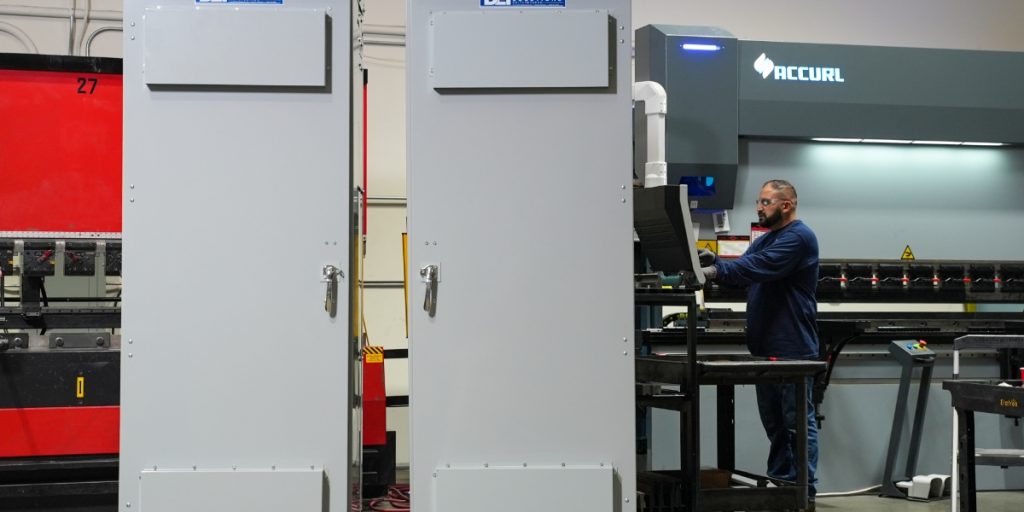
Engineering decisions define how switchgear should perform, but manufacturing quality determines how it actually performs once it is installed and energized. In a data center environment, switchgear is expected to operate continuously, often under high electrical loads, and to respond correctly during fault conditions that place extreme stress on equipment. Even small deviations in assembly or component installation can affect how reliably the system behaves over time.
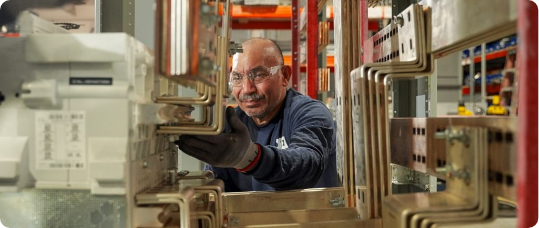
Manufacturing quality encompasses more than basic workmanship. It includes how bus connections are fabricated and torqued, how protective devices are installed and aligned, how control wiring is routed and labeled, and how assemblies are tested before leaving the factory. Errors or inconsistencies in any of these areas may not be immediately visible at startup, but they can lead to overheating, nuisance trips, accelerated component wear, or failure during abnormal conditions. In facilities where uptime is critical, these latent issues represent unacceptable risk.
This is where recognized standards and certifications become significant. Standards such as UL 891 for low-voltage switchgear establish a verified baseline for safety and performance. Equipment built to these standards has been evaluated under defined test conditions to confirm that it can withstand specified fault currents, manage temperature rise, and operate safely under both normal and abnormal scenarios. For purchasers and operators, this third-party verification reduces uncertainty by confirming that the equipment meets established criteria rather than relying solely on manufacturer claims.
OEM relationships add another layer of assurance. When a manufacturer is a certified OEM, it means their engineering and manufacturing processes have been reviewed and approved to integrate specific components correctly. This helps ensure compatibility between components, consistent application of protective devices, and access to long-term technical support. For data center operators and procurement teams, certified equipment simplifies inspections, supports compliance with codes and insurance requirements, and provides greater confidence that the switchgear will perform predictably throughout its service life.
Manufacturing quality and adherence to standards are not abstract concepts. They directly influence whether switchgear behaves as expected during routine operation, maintenance activities, and fault events. For organizations investing in critical electrical infrastructure, certified, well-manufactured switchgear is a foundational element of managing operational risk and protecting long-term uptime.
Learn More About High-Quality Switchgear Engineering
Ensuring data center uptime requires more than redundancy, it requires electrical systems that are thoughtfully engineered, carefully manufactured, and designed to perform predictably under real-world conditions. Switchgear sits at the core of this effort, quietly supporting reliable operations every day.
At DEI Power Solutions, we design and manufacture UL 891 low-voltage switchgear with a focus on disciplined engineering, reliable component integration, and predictable performance. As a Siemens Certified OEM, we integrate proven components using approved engineering and manufacturing practices to support long-term reliability in critical environments.
To learn more about our approach to switchgear design and manufacturing for data center applications, visit https://deipowersolutions.com/ or contact our team at 866-773-8050.