
Switchgear is one of the most critical components in any electrical distribution system. At its core, reliable switchgear depends on the quality and performance of the components used inside it. Circuit breakers, protective devices, control elements, and monitoring systems all play a critical role in how electrical distribution systems operate under both normal and fault conditions. For engineers, contractors, and facility owners, the selection of these components directly influences safety, reliability, maintainability, and long-term performance.
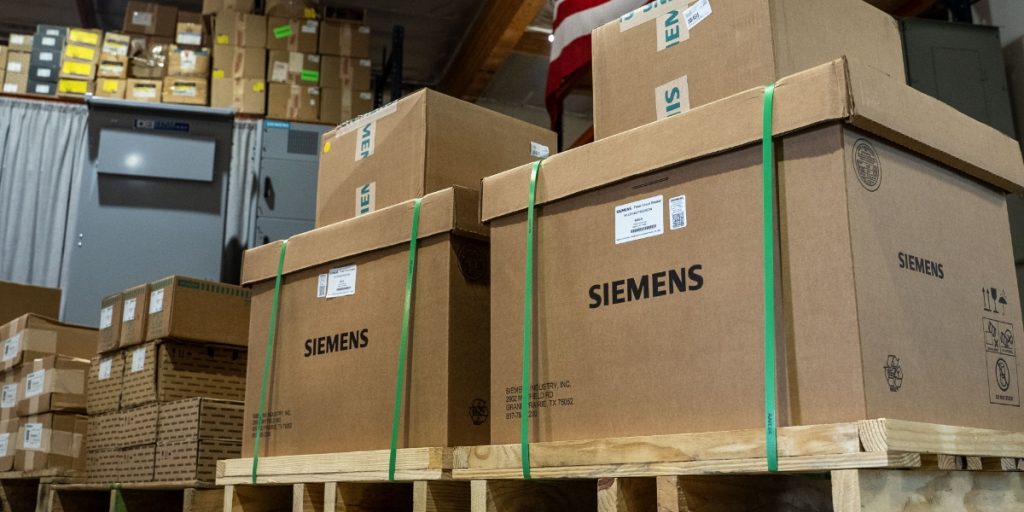
Among component manufacturers, Siemens has established itself as a widely trusted name in electrical distribution. Siemens components are commonly specified in low-voltage switchgear because of their proven performance, consistency, and compatibility with modern protection and monitoring requirements. Understanding why Siemens components matter in switchgear design helps stakeholders make informed decisions when evaluating equipment quality and long-term system value.
Component Selection is Critical to Switchgear Performance
Switchgear is often evaluated as a complete assembly, but it performs for the job is determined by how its internal components function together. Circuit breakers must interrupt faults reliably, protection devices must operate predictably, and control components must communicate system conditions accurately. When these elements are poorly matched or inconsistently manufactured, even well-designed switchgear can experience operational issues.
High-quality switchgear engineering begins with careful component selection. Siemens components are frequently chosen because they are designed to operate consistently across a wide range of electrical conditions and applications. Their integration into switchgear designs supports predictable performance, which is especially important in facilities where uptime and safety are critical.
Reliability Under Fault Conditions
One of the most demanding requirements placed on switchgear components is their performance during fault events. Short circuits can generate extremely high currents and mechanical forces in a fraction of a second. Circuit breakers and protective devices must respond quickly and reliably to isolate faults before they escalate.
Siemens circuit breakers are engineered to handle these conditions repeatedly and consistently. Their interrupting capabilities, mechanical durability, and coordination characteristics are well documented and widely understood by engineers. This reliability is one reason Siemens components are commonly used in UL 891 switchgear and other low-voltage switchgear assemblies.
From a system design perspective, using components with predictable fault performance reduces uncertainty during protective device coordination studies and supports safer operation over the life of the equipment.
Protection and Coordination in Modern Electrical Systems
In practice, protection and coordination are where component selection has a direct impact on how a system behaves in the field. Modern facilities such as data centers, advanced manufacturing plants, healthcare campuses, and large commercial buildings often rely on multiple power sources, including utility feeds, on-site generation, and uninterruptible power systems. These environments also tend to operate with higher load densities, tighter uptime requirements, and more complex distribution architectures than traditional facilities.
As a result, protective devices must operate in a precise and predictable sequence to isolate faults without unnecessarily impacting adjacent systems. Siemens breakers and protection components are commonly used because their time-current characteristics are well defined and familiar to engineers performing coordination studies. This makes it easier to design systems where faults are cleared locally and quickly, supporting both reliability and operational continuity.
Consistency and Standardization Matter
Consistency across component families becomes especially important when switchgear is specified, installed, and maintained across multiple projects or facilities. Siemens components are widely used in switchgear design in part because their breakers, accessories, and protection devices follow consistent design logic and performance behavior across product lines.
For engineers, this means protection settings, coordination curves, and device characteristics translate more predictably from one project to the next. For contractors, it reduces installation variability and field uncertainty because components are familiar and supported by established documentation. Over the life of the equipment, this consistency also simplifies maintenance and spare parts planning, particularly for facilities that standardize their electrical infrastructure. Rather than re-learning how each system behaves, operators can rely on a common framework, which reduces long-term operational friction and improves overall system reliability.
Integration With Monitoring and Digital Systems
As electrical systems become more complex, visibility into system behavior is no longer optional. Modern facilities often rely on real-time data to understand load trends, breaker status, fault history, and system health. This is especially true in environments where downtime carries significant operational or financial consequences.
Siemens components are commonly selected in switchgear designs because they integrate cleanly with monitoring, metering, and protection platforms that are already familiar to many engineering and operations teams. Breakers and protective devices can be configured to provide meaningful operational data rather than just basic trip indication. When properly engineered, this data supports condition-based maintenance, post-event analysis, and informed operational decision-making. From a design standpoint, using components with established communication capabilities reduces the need for custom interfaces and minimizes integration risk as systems evolve.
Supporting Safety Through Component-Level Design
Electrical safety is influenced by far more than enclosure ratings or warning labels. It is shaped by how individual components behave during both normal operation and abnormal events. Breaker response times, consistency of trip performance, and mechanical reliability all affect how safely faults are managed.
Siemens components are designed to meet rigorous testing and performance requirements, which is one reason they are widely accepted in safety-critical applications. In switchgear design, predictable component behavior allows engineers to better assess arc-flash exposure, define safe working boundaries, and implement mitigation strategies where appropriate. While no component alone eliminates risk, using protection devices with known performance characteristics supports safer system behavior and reduces uncertainty during both operation and maintenance.
Lifecycle Performance and Long-Term Maintainability
Switchgear is rarely replaced because it stops working altogether. More often, it becomes difficult to maintain, parts become unavailable, or performance no longer aligns with current operational needs. Component selection plays a major role in how gracefully switchgear ages.
Siemens components are broadly supported, well documented, and widely understood within the electrical industry. This matters over a 20–30 year equipment lifespan. Technicians are more likely to be familiar with testing procedures, replacement parts are easier to source, and documentation is more readily available. From a lifecycle perspective, these factors reduce long-term operational risk and help ensure switchgear remains serviceable as facilities evolve.
Engineering Flexibility in Custom Switchgear Designs
Custom switchgear design often requires balancing standardization with application-specific needs. Facilities differ in load profiles, redundancy strategies, physical constraints, and future expansion plans. Components that offer flexibility in ratings, accessories, and configurations give engineers more room to optimize designs rather than compromise.
Siemens components support this flexibility by offering a broad range of breaker frames, trip units, and accessories that can be tailored to specific system requirements. This allows switchgear engineers to design assemblies that align closely with how a facility actually operates, whether that means supporting selective coordination, accommodating future feeders, or integrating backup power sources. Flexibility at the component level enables better system-level outcomes without introducing unnecessary complexity.
Manufacturing Quality and Component Integration
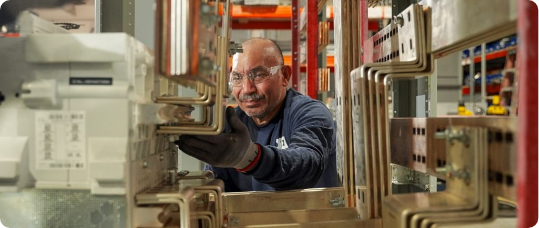
Even the best component selection must be supported by disciplined manufacturing practices. The way components are installed, wired, torqued, and tested directly affects how switchgear performs in the field. Small execution errors can undermine otherwise sound engineering decisions.
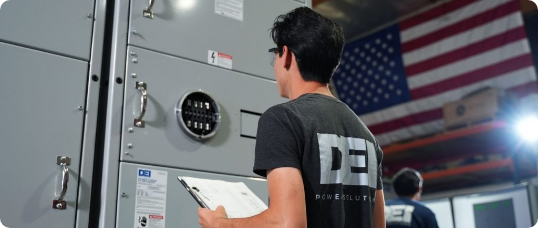
When Siemens components are integrated into switchgear by experienced manufacturers, attention to detail matters. Proper bus alignment, consistent torquing, correct wiring practices, and thorough factory testing help ensure components perform as intended once energized. Factory testing verifies not only individual components, but how they function together as a complete system. This reduces startup issues, simplifies commissioning, and improves confidence that the switchgear will behave predictably under load and fault conditions.
Why Component Choice Matters Across Project Teams
Component selection influences every phase of a project, from design through operation. Engineers rely on components with predictable characteristics to complete coordination studies and system analysis accurately. Contractors benefit from components that are familiar, clearly documented, and supported by established installation practices. Procurement teams value manufacturers with consistent product availability and transparent technical documentation.
For owners and operators, these decisions show up later in ways that are less visible but highly consequential. Systems that are easier to maintain, troubleshoot, and expand tend to experience fewer unplanned disruptions. Choosing components that are widely supported and well understood helps align the priorities of design, construction, and operations, reducing friction throughout the project lifecycle.
Learn More About Switchgear Design and Components
At DEI Power Solutions, component selection is treated as an engineering decision rather than a preference. As a Siemens Approved OEM, we design and manufacture UL 891 low-voltage switchgear using Siemens components that are selected based on system requirements, coordination needs, and long-term reliability. That approach allows us to deliver switchgear assemblies that integrate proven protection devices with disciplined engineering and manufacturing practices.
To learn more about our switchgear design process and manufacturing capabilities, visit https://deipowersolutions.com/ or contact our team at 866-773-8050 to discuss project-specific requirements. Let us help you build your project today!